Process Overview
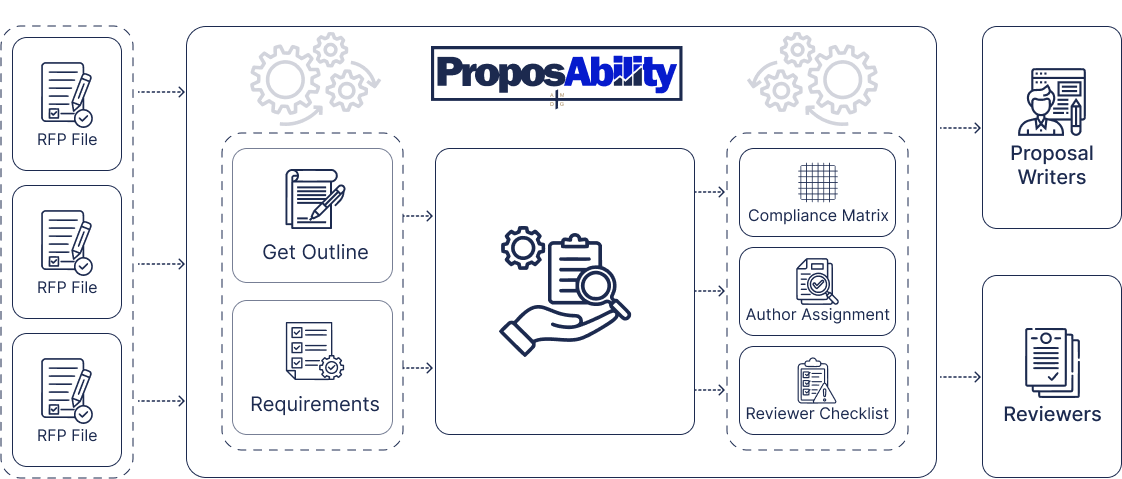
Proposability™ helps you shred RFPs into requirements and assign them to outline sections. This systematic approach allows you to easily generate outlines, compliance matrices, and author and reviewer checklists from a single source of truth.
The process begins with the RFP document itself. Instead of manually copying and pasting requirements into spreadsheets or trying to manage everything in separate documents, Proposability™ provides an integrated platform that streamlines the entire proposal development workflow.
Build as You Read
One of the most powerful features of Proposability™ is the ability to build your proposal structure as you read through the RFP. This approach transforms the traditionally tedious process of requirement analysis into an efficient, integrated workflow.
The system allows you to:
- Build your outline and allocate requirements to specific sections in real-time
- Accept a requirement into your compliance matrix with a single click, or allocate it to an outline section
- Eliminate the need for copying from PDFs and pasting into Excel spreadsheets
This streamlined approach means you can focus on understanding the requirements rather than managing the mechanics of document organization. As you read through the RFP, you're simultaneously building the framework for your proposal response.

Annotated Outlines Break Up Complex RFPs
Large RFPs can be overwhelming to authors, especially those who are inexperienced with the proposal process. Proposability™ addresses this challenge through annotated outlines that help your team focus on what is relevant to their specific sections.
Instead of asking team members to wade through hundreds of pages of RFP text, annotated outlines provide targeted, relevant information for each section. This approach ensures that authors understand exactly what they need to address without getting lost in irrelevant details.
The annotated outline approach is particularly valuable for complex proposals where different sections may have overlapping or related requirements. By clearly delineating which requirements apply to which sections, you eliminate confusion and ensure comprehensive coverage.
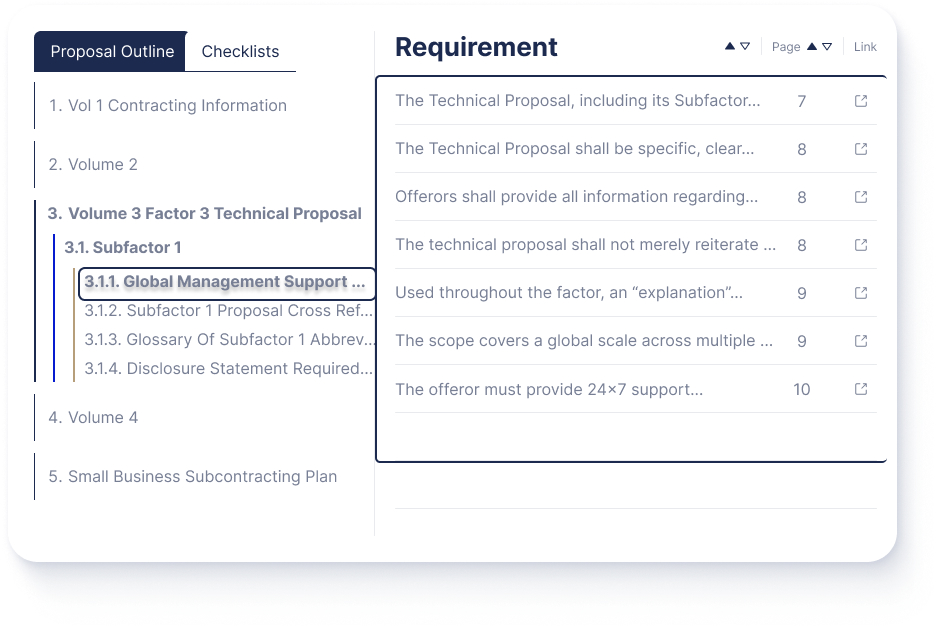
For more information about why annotated outlines are important to RFP analysis, read our detailed explanation.
Generate Kickoff Documents from Integrated Data
One of the most significant advantages of the Proposability™ approach is the ability to generate all your kickoff documents from a single, integrated source of data. This eliminates the inconsistencies and errors that often plague traditional proposal development processes.
From your allocated outline, you can generate:
- Detailed outlines that guide your writing team through the proposal structure
- Compliance matrices that ensure all requirements are addressed
- Author mockups that provide clear guidance on what each section should contain
- Reviewer checklists that help ensure quality and completeness
This integrated approach ensures that everyone on your team is working from the same information and that all documents are consistent with your overall proposal strategy. You can invite your entire team to view these documents in Proposability™ with no user limits, or export them to Excel if you prefer to work in that environment.
The Benefits of Integration
The integrated nature of the Proposability™ process provides several key benefits that can significantly improve your proposal success rate:
Consistency Across All Documents
Because all documents are generated from the same source data, you eliminate the inconsistencies that often occur when different team members create documents independently. This consistency is crucial for maintaining proposal quality and ensuring that all requirements are properly addressed.
Reduced Administrative Overhead
The automated generation of kickoff documents significantly reduces the administrative burden on proposal managers. Instead of spending time creating and maintaining multiple documents, you can focus on strategic planning and team coordination.
Improved Team Coordination
With all team members working from the same integrated platform, coordination becomes much more efficient. Changes to requirements or outline structure are automatically reflected across all documents, ensuring that everyone stays aligned throughout the proposal development process.
Conclusion
The Proposability™ process represents a fundamental shift from traditional proposal management approaches. By integrating requirement analysis, outline development, and document generation into a single platform, it eliminates many of the inefficiencies and errors that plague traditional methods.
This integrated approach allows proposal teams to focus on what matters most: developing compelling, compliant proposals that win. By streamlining the administrative aspects of proposal development, Proposability™ enables teams to devote more time and energy to strategic thinking and quality writing.
The result is a more efficient, effective proposal development process that produces better outcomes with less effort. For organizations that regularly compete for complex, high-value contracts, this approach can be the difference between winning and losing.